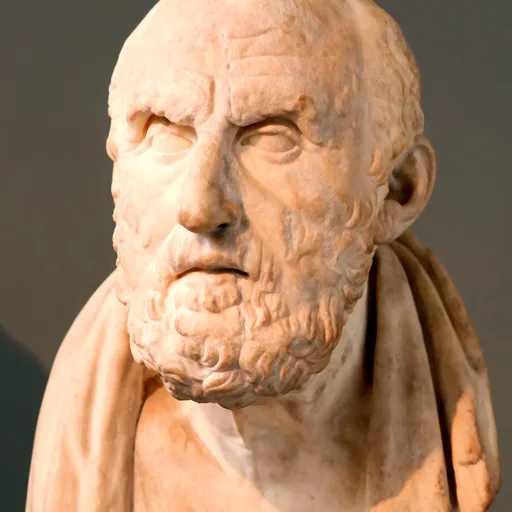
Philosophers / Medieval

Augustine of Hippo
DZ 0354-11-14 ~ 0430-08-29
Latin Church Father (354-430). After detours through Manichaeism and Neoplatonism he converted at 32 and became Bishop of Hippo. His Confessions and City of God set the template for theology and selfhood for centuries.
What You Can Learn
Augustine's our heart is restless until it rests in you reaches the bottom of modern dissatisfaction. Feeds, consumption, career — the object of desire keeps changing while the restlessness does not. The inquietum cor he diagnosed is what modern therapy addresses. Love, and do what you will translates into leadership: if love grounds action, judgement orders itself. Lord, grant me chastity, but not yet captures the pattern of seeking change while choosing the status quo. Confessions invented modern autobiography.
Words That Resonate
Our heart is restless until it rests in you.
Inquietum est cor nostrum, donec requiescat in te.
Take and read.
Tolle, lege.
Lord, grant me chastity and continence — but not yet.
Da mihi castitatem et continentiam, sed noli modo.
Love, and do what you will.
Ama et fac quod vis.
Life & Legacy
Aurelius Augustinus was born on 13 November 354 in Thagaste, present-day Algeria, to a pagan father, Patricius, and a devout Christian mother, Monica, later canonised. The household spoke Latin; he never read Greek with ease.
In Carthage he studied rhetoric, took an unnamed concubine for fifteen years, and fathered Adeodatus (Given by God). He embraced Manichaean dualism for nearly a decade, then read Cicero's lost Hortensius and woke to philosophy. Through Neoplatonism he discovered an interiority Manichaeism lacked. In 384 he moved to Milan to teach rhetoric. Bishop Ambrose's preaching and his mother's prayers worked on him. In August 386, in a garden, a child's voice chanted tolle, lege — take and read; he opened Romans 13:13-14 and converted. He was baptised at Easter 387; Monica died at Ostia.
In 391 he was ordained priest at Hippo Regius, and in 395 became bishop until 430. He never left Hippo again. His output was the largest of any Latin Father: 5,000 sermons, 300 letters, 100+ books.
Three claims define him. First, the inward turn. Confessions Book 10 — men go abroad to admire the heights of mountains and the courses of the stars, and pass themselves by — opened the human self as a subject of philosophical investigation, anticipating modern selfhood.
Second, original sin and grace. In the Pelagian controversy he argued that since the Fall, the will is bent toward evil and cannot choose good without God's prior grace. This thesis became the engine of the Reformation; the Eastern church considered it overdrawn.
Third, the two cities. Written after Alaric's sack of Rome in 410, the City of God distinguishes the City of God from the earthly city and relativises political order. It founded the Christian philosophy of history.
He died on 28 August 430 as the Vandals besieged Hippo, with the Penitential Psalms on his wall. He was the last ancient philosopher and the first medieval theologian. No Western thinker fails to read him.
Expert Perspective
Augustine stands at the hinge between ancient philosophy and medieval theology. Absorbing Neoplatonism while building Christian doctrine, he opened almost every theme dominating Western thought into modernity: the inward self, the philosophy of history, grace. No Western thinker passes around him.