Philosophers / Stoicism

Hierocles
Italy
Roman Stoic of the second century AD, known almost entirely through one papyrus recovered at Hermopolis in 1901. His concentric-circles model of cosmopolitanism remains a key tool in modern moral philosophy.
What You Can Learn
Hierocles's concentric circles is one of the most useful tools modern ethics has for the expansion of moral concern. Most people obsess over inner circles; others moralise abstractly while neglecting those nearby. Hierocles offers a movement, not a verdict: pull the outer circles inward. In the era of climate, refugees, and AI ethics, his diagram works surprisingly well. The same logic transfers to leadership: a manager who draws department, company, industry, and society inward earns long-term trust.
Words That Resonate
Each one of us is, as it were, encompassed by many circles.
ἕκαστος ἡμῶν οἷον πολλοῖς κύκλοις περιγέγραπται.
It is the task of one rightly oriented toward others to draw the circles in toward the centre.
ἔργον δὴ τοῦ καλῶς οἰκειουμένου πρὸς ἑκάστους τῷ συναιρεῖν εἰς τὸ μέσον τοὺς κύκλους.
The first thing an animal perceives is itself.
πρῶτον τὸ ζῷον αἰσθάνεται ἑαυτοῦ.
A grave and holy man.
vir gravis et sanctus
Life & Legacy
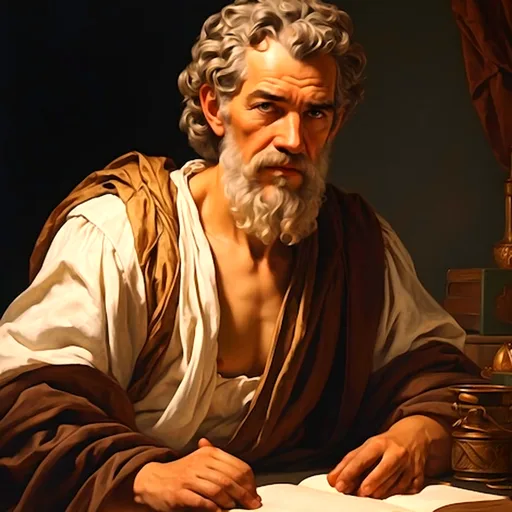
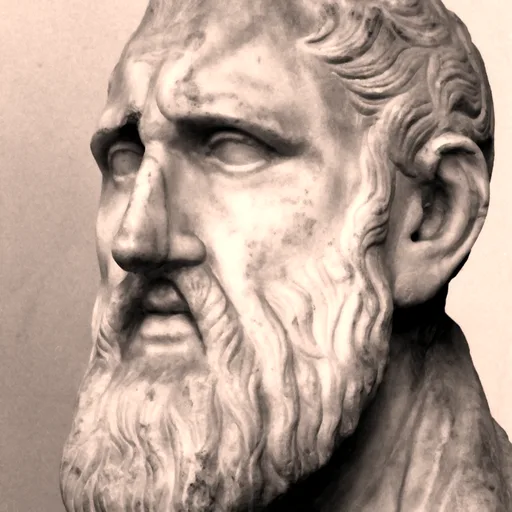
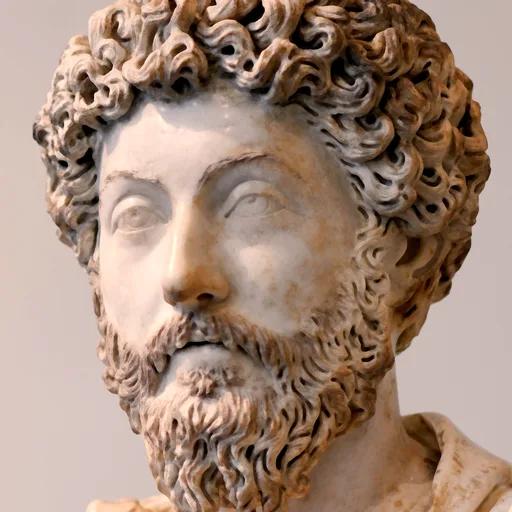
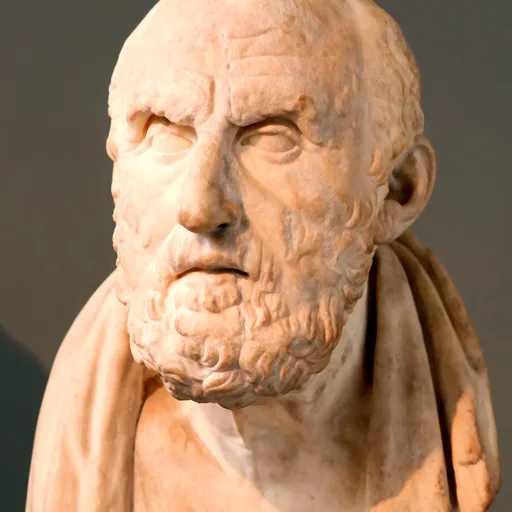
Hierocles was a Stoic philosopher of the second century AD, roughly contemporary with Marcus Aurelius. Almost nothing about his life is recorded. Aulus Gellius mentioned him in the Attic Nights as a contemporary and called him a grave and holy man. That single line is essentially the entire biographical record, yet his name survives through two textual achievements.
The first is his Elements of Ethics, recovered in 1901 from a papyrus dug up at Hermopolis in Egypt. Around 300 lines survive, advancing the strikingly modern claim that all animals — birds, reptiles, mammals — perceive themselves continuously from birth, and that this self-perception is the most basic faculty of any living being. From this biological foundation he rebuilt Stoic ethics, extending the early Stoic concept of oikeiosis (familiarisation, the impulse toward what belongs to oneself) into a full ethical theory. The recovery reshaped understanding of late Stoicism.
The second is a set of fragments preserved by Stobaeus. The most famous describes Stoic cosmopolitanism through concentric circles. Hierocles draws each person as a series of circles: (1) one's own mind, (2) immediate family, (3) extended family, (4) local community, (5) neighbouring towns, (6) one's country, (7) the entire human race. Ethical maturity, he argued, is the work of pulling these circles inward — synairein, drawing distant others into one's nearer concern. This is the ancient root of Peter Singer's modern argument about the expanding moral circle.
Contemporary Stoics Kai Whiting and Leonidas Konstantakos added an eighth circle for the environment in Being Better (2021), reshaping his model for the climate era. The standard text is the Ramelli-Konstan edition (SBL, 2009). Hierocles was no emperor and no former slave with a dramatic story; he was a working teacher whose careful arguments survive almost by accident — and that survival shows how widely Stoicism reached through Roman society.
Expert Perspective
Within late Stoicism, Hierocles is overshadowed by Epictetus and Marcus Aurelius but is structurally central to Stoic ethics. His concentric-circles model is now applied across moral philosophy, international relations, and environmental ethics. The 1901 papyrus shows Stoic studies remain alive.