Philosophers / Stoicism
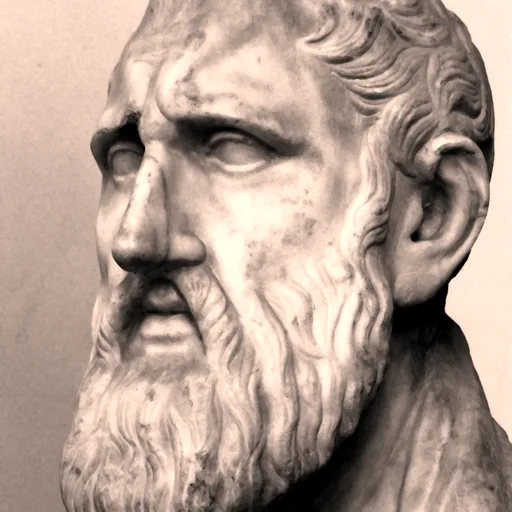
Zeno of Citium
キティオン -0333-01-01 ~ -0262-01-01
Founder of Stoicism, 4th century BC, from Cyprus
After losing everything, taught that 'virtue is the only good'
The method of distinguishing controllable from uncontrollable is the source of modern resilience
Zeno of Citium (c. 334-262 BC), a Phoenician who lost everything in a shipwreck, founded Stoicism in Athens. His doctrine that virtue alone is the good shaped Western ethics from Rome to modern resilience science.
Quotes
Man conquers the world by conquering himself.
We have two ears and one mouth, so we should listen more than we say.
The goal of life is living in agreement with Nature.
No evil is honorable: but death is honorable; therefore death is not evil.
Wellbeing is attained by little and little, and nevertheless is no little thing itself.
Related Books
Zeno of Citium - Search related books on AmazonModern Application
Zeno's core Stoic principle, distinguishing what you control from what you cannot, frames modern uncertainty. Market crashes, layoffs, and illness lie outside control; your response does not. In business this means focusing on your own value rather than obsessing over competitors. His shipwreck-to-philosophy arc is the prototype of resilience. CBT, developed from Stoic roots, gives these insights clinical backing.
Genre Perspective
Zeno severed happiness from external goods more radically than any predecessor. His system unified ethics, logic, and physics while centering practice. By refining Cynic asceticism into a workable form, he built the most influential Hellenistic school, extending through Rome to modern ethics.
Profile
Trace Stoic philosophy to its origin and you reach Zeno of Citium. Born around 334 BC on Cyprus, a Mediterranean trade hub, he came from a Phoenician merchant family. A shipwreck wiped out his fortune. Stranded in Athens, he wandered into a bookshop, picked up Xenophon's Memorabilia, and was so moved by Socrates's portrait that he resolved to study philosophy. So Diogenes Laertius records.
Zeno first studied under the Cynic Crates, whose radical rejection of possessions resonated with a man who had just lost everything. He then learned dialectic from Stilpo of the Megarian school and ethics from Polemo at the Academy, synthesizing multiple traditions.
Around 300 BC he began teaching at the Stoa Poikile, the Painted Porch overlooking the Agora. Unlike Plato's or Aristotle's enclosed schools, this public colonnade was open to all — a physical expression of his inclusive thought. The school's name became the movement's label.
Zeno divided philosophy into logic, physics, and ethics, likening the system to an egg: logic the shell, physics the white, ethics the yolk. His core ethical claim: arete (virtue) is the sole good; wealth, fame, and health are morally indifferent. Happiness comes only from living in harmony with logos, the rational order of nature.
The revolutionary force was severing happiness from external conditions. Both Plato and Aristotle still valued external goods; Zeno cut that link. Slave or emperor, anyone living by reason can flourish. This ethic flowed through Chrysippus, Seneca, Epictetus, and Marcus Aurelius, and still informs CBT and resilience research.
Zeno also pioneered cosmopolitanism, envisioning a community bound by reason, not nationality. He died around 262 BC, officially honored by Athens.