Entrepreneurs / Manufacturing
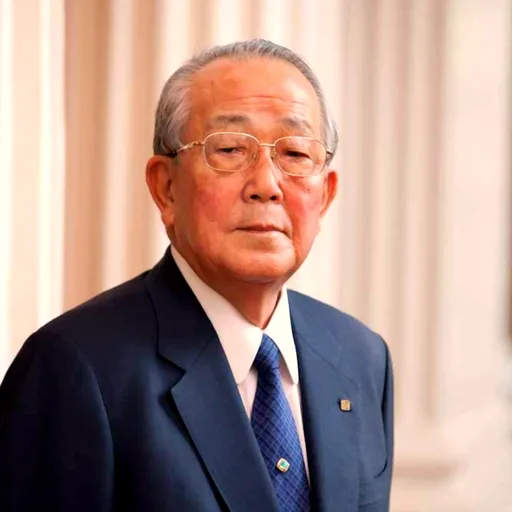
Kazuo Inamori
日本 1932-01-21 ~ 2022-08-24
Showa-Heisei era serial entrepreneur and management philosopher
Founded Kyocera and KDDI and turned around JAL in just two years
The self-interrogation 'is my motive virtuous?' is the core of altruistic management philosophy
Born in Kagoshima in 1932, Kazuo Inamori founded Kyocera and KDDI, each a trillion-yen enterprise. At 78 he rescued bankrupt Japan Airlines. A Zen priest, he proved altruistic management delivers.
Quotes
The result of life and work = Attitude x Effort x Ability.
人生・仕事の結果=考え方×熱意×能力
Is the motive good? Is there no selfish intent?
動機善なりや、私心なかりしか
Conceive optimistically, plan pessimistically, execute optimistically.
楽観的に構想し、悲観的に計画し、楽観的に実行する
When you judge with an altruistic heart, everything works out.
利他の心で判断すれば、すべてがうまくいく
Pricing is management.
値決めは経営である
Make an effort that yields to no one.
誰にも負けない努力をする
Related Books
Kazuo Inamori - Search related books on AmazonModern Application
Amoeba management anticipates agile frameworks: small teams tracking metrics mirrors OKR and scrum, especially in remote settings. "Is the motive good?" provides an ethical test for the ESG era. "Pricing is management" speaks to SaaS founders: value-based pricing rather than undercutting builds lasting strength. His JAL rescue remains one of the most compelling turnaround cases in business history.
Genre Perspective
Inamori's distinction: founding two unrelated trillion-yen companies then rescuing a bankrupt airline. Fusing technology with Buddhist altruism, he represents a pinnacle of Japanese management thought. Seiwajuku's reach to ten thousand owners is an unparalleled educational legacy.
Profile
The question Inamori forces: how does one person build two giants in unrelated industries? Behind Kyocera and KDDI stands a method that fuses technology and philosophy into a single managerial discipline.
Born in 1932 in Kagoshima as the second of seven children, he survived childhood tuberculosis -- an encounter with mortality that marked his outlook. After studying organic chemistry at a local university, he joined Shofu Industries, a Kyoto insulator maker plagued by late paychecks, and threw himself into new-ceramic research. In 1959, with colleagues and a mentor's backing, he co-founded Kyoto Ceramic (now Kyocera) with 3 million yen in capital, turning fine ceramics -- then a niche technology -- into the backbone of semiconductor packaging and electronic components.
During Kyocera's growth he devised "amoeba management": splitting the organization into small autonomous units of five to fifty people, each tracking daily profit. The goal was not merely cost control but cultivating an ownership mentality in every employee. In 1984, seizing on telecom deregulation, he founded DDI (later KDDI) to challenge NTT's monopoly and reduce phone bills. DDI merged into KDDI in 2000, bringing genuine competition to Japan's telecom market for the first time.
Running through his career is Buddhist altruism (rita). Ordained as a Rinzai Zen priest in 1997, Inamori defined his corporate mission as pursuing all employees' material and spiritual well-being. Kyocera never posted a loss, and his management study group Seiwajuku attracted over ten thousand small-business owners worldwide.
His crowning feat was the 2010 JAL turnaround. Saddled with 2.3 trillion yen in debt, the airline was bankrupt. Inamori, then 78, accepted the chairmanship without pay, introduced amoeba accounting by route, and drove a cultural shift that produced record operating profits and a re-listing on the Tokyo Stock Exchange within just two years. He died in August 2022 at the age of 90.