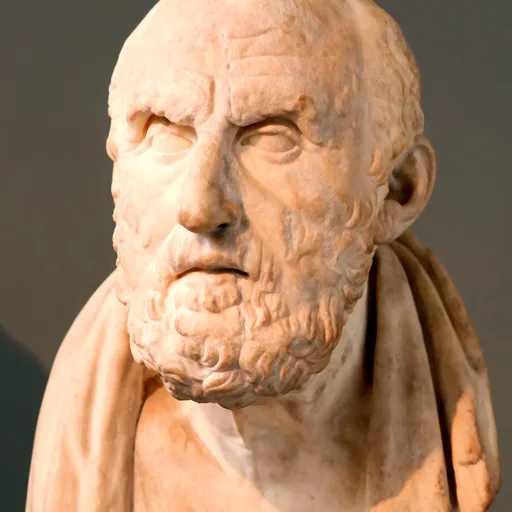
Philosophers / Modern Western

Thomas Hobbes
United Kingdom 1588-04-05 ~ 1679-12-04
English philosopher (1588-1679) born prematurely as the Armada approached. "My mother gave birth to twins: myself and fear," he later wrote. Author of Leviathan (1651), founding work of modern social contract theory.
What You Can Learn
"Covenants, without the sword, are but words" describes every contract dispute and broken treaty. Hobbes's cold equation lurks behind regulatory capture and co-founder lawsuits. His premise — that humans are pulled toward conflict by anticipation of future scarcity — prefigures behavioural economics: loss aversion assumes the same anxious forecaster. For mental health his realism is liberating: fear is a design specification. In leadership he warns that goodwill without accountability collapses under stress.
Words That Resonate
Life & Legacy
Thomas Hobbes (1588-1679) is one of the founders of modern political philosophy, the man who called the state of nature "war of all against all" where life is "solitary, poor, nasty, brutish, and short." Born prematurely in Wiltshire as his mother heard the Spanish Armada was approaching, he later wrote that his mother had given birth to twins — himself and fear.
After Oxford in 1608, Hobbes tutored the Cavendish family for most of his life. Grand tours put him among Galileo, Mersenne, and Descartes, and convinced him political philosophy needed the rigour of geometry. His 1629 translation of Thucydides already carries the Hobbesian lesson: politics is about conflict.
In 1640, sensing parliamentary crisis, Hobbes fled to Paris and tutored the future Charles II. Leviathan, published in 1651, set out his core argument: humans, uniquely able to anticipate the future, suffer infinite self-preservation anxiety and fall into mutual aggression without an enforcer. The way out is the social contract: every person surrenders natural rights to a single sovereign empowered to enforce peace. "Covenants, without the sword, are but words."
The argument scandalized everyone. Royalists called him an atheist for grounding sovereignty in consent rather than divine right; republicans called him a defender of tyranny. The double-rejection captures his originality: he built the state from below, from equal individuals contracting their way out of a hypothetical state of nature. Locke, Rousseau, and Rawls inherited this method while disputing his pessimism.
After the Restoration, Hobbes lived under Charles II's protection but Parliament barred him from publishing new works. Still he produced De Corpore, De Homine, Behemoth, and Homer translations in his eighties. With Descartes and Spinoza, he is the third pillar of seventeenth-century mechanistic philosophy. His shadow falls over modern realism and any organisation that has learned rules without enforcement are suggestions.
Expert Perspective
Hobbes is a twin founder of the mechanistic worldview alongside Descartes, though their methods diverge: Descartes built outward from consciousness, Hobbes upward from physical motion. In the social-contract lineage he precedes Locke, Rousseau, and Rawls, yet stands alone in treating nature as genuine war.