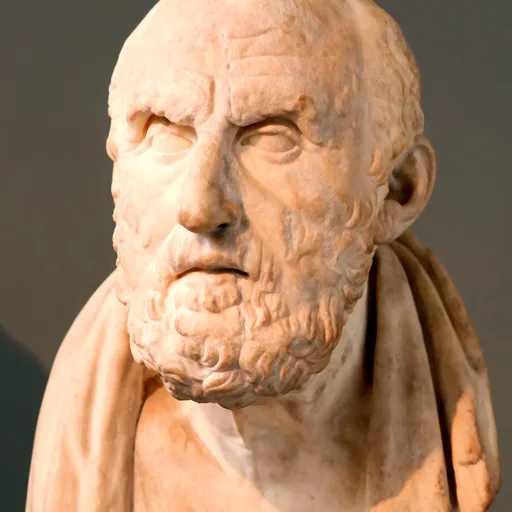
Philosophers / Modern Western

Francis Bacon
United Kingdom 1561-02-01 ~ 1626-04-19
Born 1561 in London, Francis Bacon rose to Lord Chancellor under James I and laid the philosophical foundation of modern science. Author of "Knowledge is power" and the doctrine of the four Idols, his Novum Organum.
What You Can Learn
Bacon's most usable gift to modern professionals is his diagnosis of the four Idols. The Idols of the Tribe (universal human cognitive bias), of the Cave (personal blind spots), of the Marketplace (confusion produced by language), and of the Theatre (uncritical acceptance of authority) are the distant ancestors of modern cognitive bias research and behavioural economics. Auditing your own thinking before a decision — "which Idol is this?" — lines up directly with data-driven management. His principle that nature.
Words That Resonate
Knowledge itself is power.
Ipsa scientia potestas est.
Nature is conquered only by obedience.
Natura non nisi parendo vincitur.
Reading maketh a full man; conference a ready man; and writing an exact man.
If a man will begin with certainties, he shall end in doubts; but if he will be content to begin with doubts, he shall end in certainties.
Life & Legacy
Francis Bacon, 1st Viscount St Alban, founded the philosophical method of modern science and overturned the scholastic order of knowledge that had ruled European thought for centuries. His claim — interrogate nature by experiment and the answers will become new technology and power — sits at the origin point of the Royal Society, the Industrial Revolution, and modern science. He was also Lord Chancellor of England, fell on bribery charges, and his life embodies the entanglement of intellect, power, idea, and consequence.
Born in 1561 at York House in London, the youngest son of Sir Nicholas Bacon, Lord Keeper to Elizabeth I. His mother Anne Cooke was the sister of Mildred Cooke, wife of Lord Burghley — placing him at the inner ring of Elizabethan power. He entered Trinity College, Cambridge at twelve, found Aristotelian philosophy "strong in disputation but useless to human life," and left without a degree. From 1576 he read law at Gray's Inn and in 1577 accompanied the English ambassador to France, observing post-Wars-of-Religion society at first hand.
His father's sudden death in 1579 left him with little inheritance, and he had to enter politics from below. He sat in the Commons from 1581. In 1593 he opposed Elizabeth's request for special taxation, drew her anger, and lost favour. Under the patronage of the Earl of Essex he survived as a half-employed legal counsel. When Essex rose in revolt in 1601, Bacon was compelled to act as prosecutor — a choice still debated for its motives and ethics today.
James I's accession in 1603 reopened his career. He was knighted, served as Solicitor General, then Attorney General, and in 1618 became Lord Chancellor and was created Viscount St Alban. In parallel he produced the writing that mattered: The Advancement of Learning (1605), and in 1620 the Novum Organum (New Organon), the second part of the unfinished Instauratio Magna. The book diagnosed four classes of bias — the Idols of the Tribe, of the Cave, of the.
Expert Perspective
Bacon stands with Descartes as one of the two sources of modern philosophy — the founder of British empiricism. His Novum Organum, attacking scholastic Aristotelian deduction and proposing an inductive experimental method, runs forward through the Royal Society (1660), the French Encyclopedie, and.