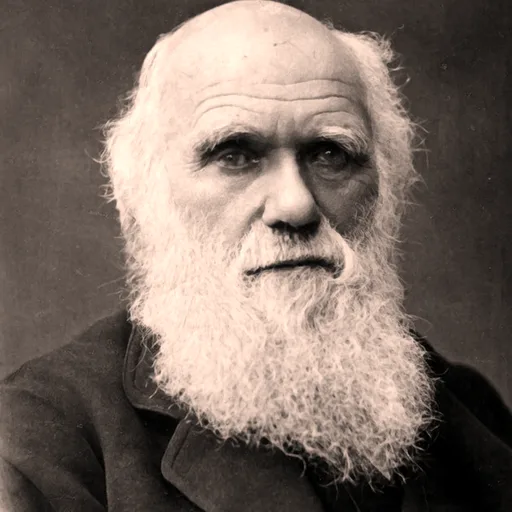
Psychologists / experimental

Francis Galton
United Kingdom 1822-02-16 ~ 1911-01-17
British statistician (1822-1911). Darwin's cousin, he founded individual-differences psychology, invented regression and correlation, and coined "eugenics" in 1883 - a contested statistical legacy.
What You Can Learn
Galton's correlation and regression equations sit beneath modern data science, machine learning, A/B testing and factor-based investing. The quincunx demonstration of normality and regression to the mean still explains the equity mean-reversion trade and the sports sophomore slump. Yet his eugenics speaks directly to today's debates over algorithmic hiring, credit scoring and gene-edited embryos. The slide from classifying people by data to sorting people by worth is unmistakable in his archive.
Words That Resonate
Whenever you can, count.
I have no patience with the hypothesis - often implied in tales meant to teach children to be good - that babies are born pretty much alike, and that the only agencies creating differences between boy and boy, or man and man, are steady application and moral effort.
Eugenics is the science which deals with all influences that improve the inborn qualities of a race; also with those that develop them to the utmost advantage.
Order in apparent chaos: I know of scarcely anything so apt to impress the imagination as the wonderful form of cosmic order expressed by the Law of Frequency of Error.
Life & Legacy
Sir Francis Galton was born on 16 February 1822 in Birmingham, youngest son of a wealthy banker. His mother Violetta was Erasmus Darwin's daughter, making Charles Darwin his first cousin. He read medicine in London and mathematics at Cambridge; his father's death in 1844 left him wealthy, a lifelong gentleman scientist. A southern-African expedition (1850-52) won him the RGS Gold Medal; he then turned to meteorology and produced the first weather map.
In 1859 his cousin's Origin of Species changed his life. He grew convinced human ability was inherited. In 1869 Hereditary Genius surveyed 415 eminent Britons, claiming children of the eminent were 200 times likelier to be eminent. In 1875 he published the first twin study, template for behaviour genetics. His 1874 quincunx demonstrated regression to the mean.
His decisive contribution was statistical. In 1885, plotting sons against fathers, he saw offspring heights regress toward the population mean - the original "regression coefficient" - and named the two-variable bond "co-relation," ancestor of today's correlation r. In 1888 he computed the height-forearm correlation at 0.80, opening the road for Pearson and Fisher. At the 1884 International Health Exhibition his Anthropometric Laboratory measured over ten thousand visitors.
The shadow is deep. In 1883's Inquiries into Human Faculty he coined "eugenics" and argued for selective breeding of human stock. The doctrine became the theoretical core of US and Nordic sterilisation laws and underpinned Nazi racial hygiene. His 1904 Eugenics Record Office became the Galton Laboratory in 1907, where Pearson and Fisher ran statistics and eugenics together.
He died on 17 January 1911, bequeathing the UCL chair of eugenics. Almost every concept of modern statistics descends from him; yet since 2020 UCL has debated renaming Galton Lecture Theatre - good and ill, inseparable.
Expert Perspective
Galton opened a current parallel to Wundt's introspective lab: the quantitative study of individual differences. As progenitor of intelligence testing, psychometrics and behaviour genetics, he reached US psychology via Cattell. His eugenics dressed prejudice in data, prompting UCL renaming debates.