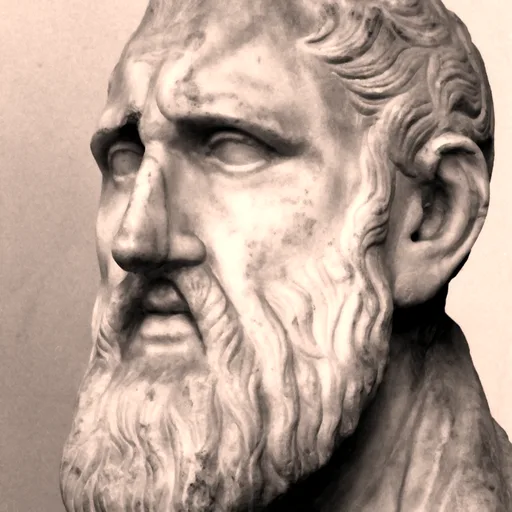
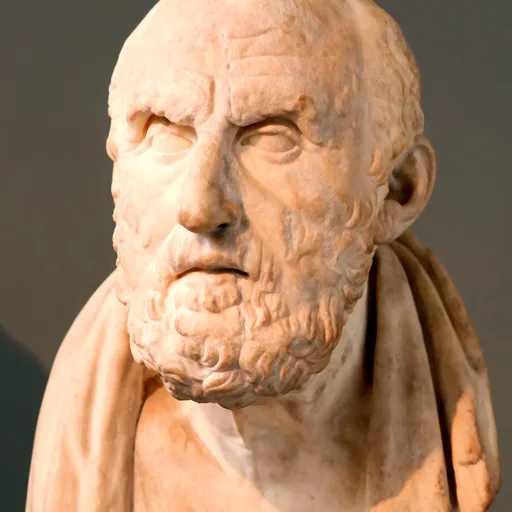
Philosophers / Ancient Greek

Antisthenes
Greece -0444-01-0 ~ -0364-01-0
Greek philosopher (c. 446-366 BC), pupil of Socrates, traditional founder of Cynicism. He taught that virtue is a matter of deeds and alone suffices for happiness, laying the ascetic foundations Stoics would inherit.
What You Can Learn
Antisthenes's principle that virtue is a matter of deeds is direct counsel for an age that consumes self-help instead of practising it. Saving Instagram quotes does not change a life. His claim that virtue alone suffices is the ancestor of minimalism and FIRE: train the soul to detach from external wealth. His line that doing good while being ill-spoken of is kingly is calibrated for the social-media era — entrepreneurs, reformers, activists face exactly that. His answer: that's because you are kingly.
Words That Resonate
Virtue is a matter of deeds, not words.
ἀρετὴ τῶν ἔργων ἐστίν, οὐ τῶν λόγων.
It is kingly, Socrates, to do good and be ill-spoken of.
βασιλικόν, ὦ Σώκρατες, εὖ μὲν πράττειν, κακῶς δ' ἀκούειν.
A horse I can see, but horsehood I cannot see.
ἵππον μὲν ὁρῶ, ἱππότητα δὲ οὐχ ὁρῶ.
Virtue is sufficient for happiness.
ἡ ἀρετὴ αὐτάρκης πρὸς εὐδαιμονίαν.
Life & Legacy
Antisthenes was born around 446 BC in Athens to an Athenian father and a Thracian (or Phrygian) mother. The mixed heritage brought lifelong taunts of being not a true Athenian; he answered that the mother of the gods was Phrygian.
He studied rhetoric under Gorgias, then walked nine kilometres daily from Piraeus to Athens to hear Socrates, pulling friends along. He fought at Tanagra around 426 BC, was present at Socrates's death in 399, and helped procure the punishment of those who engineered the trial.
After Socrates's death he founded his school at the Cynosarges, a gymnasium outside Athens for citizens of mixed parentage and open to the poor. He wore a worn cloak as his only undergarment, carried staff and wallet, and lived austerely. This costume became the uniform of his followers; his nickname haplokuon, the dog absolute, captured the style. Through Diogenes and Crates the dress passed to Zeno and became Stoic.
Four propositions sit at the centre of his philosophy. First, virtue can be taught. Second, virtue alone suffices for happiness. Third, virtue is a matter of deeds, not words. Fourth, the wise are self-sufficient (autarkeia). Wealth, reputation, and pleasure were all external and unreliable; only inner virtue could be relied on. Marcus Aurelius quotes him in Meditations 7.36 — to do good and be ill-spoken of is kingly — confirming the line of transmission from Antisthenes into Stoicism.
His writings filled ten volumes, but only fragments survive with two declamations, Ajax and Odysseus. In logic he was a strict nominalist: I see a horse, but I do not see horsehood. This put him in direct conflict with Plato; the rivalry was well known in antiquity.
Whether Diogenes of Sinope studied under him is disputed; some argue the Stoics invented the lineage. Either way, the line of influence — the ascetic life, virtue alone as good, the autarkeia ideal — runs into Stoicism and forms the spine of Hellenistic ethics. He died in Athens around 366 BC.
Expert Perspective
Antisthenes is the branch in ancient Greek philosophy where Socrates's ethical core turns away from Plato's metaphysics and toward an ascetic, practical, nominalist tradition. Through Diogenes, Crates, and Zeno that line becomes Stoicism — the dominant ethical voice of the Hellenistic world.