Philosophers / Eastern

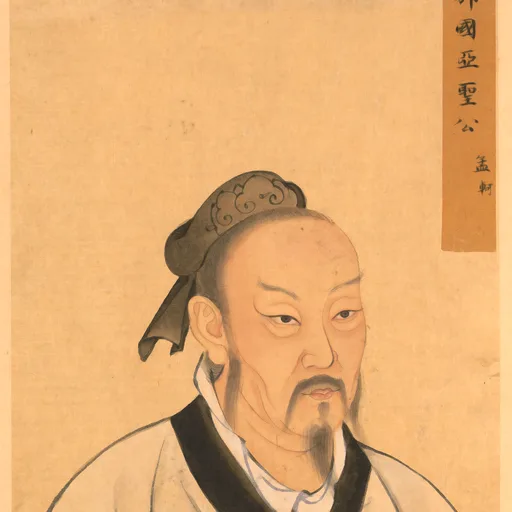
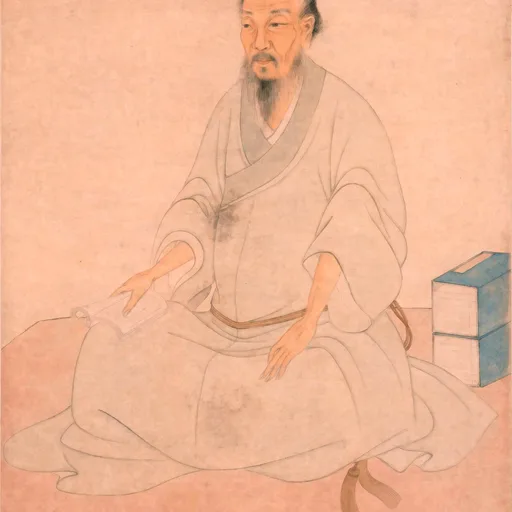
Zhu Xi
China 1130-10-25 ~ 1200-04-30
Southern Song Confucian (1130-1200), the systematizer of Neo-Confucianism. His Four Books commentaries served as China's civil-service exam basis from 1313 to 1905, shaping East Asia's governing class for six centuries.
What You Can Learn
"Investigate things to extend knowledge" reads like a Song manifesto for evidence-based work. Zhu Xi's pairing of inner attention with outward inquiry prefigures how modern professionals combine mindfulness with rigorous analysis. His mantra "learning is for the self" cuts hard in an age of credentialism: study compounds when it is not performance. The pond poem — clear because living water keeps flowing in — is the most beautiful argument for lifelong learning ever written.
Words That Resonate
Life & Legacy
Zhu Xi (1130-1200) is the Southern Song scholar who reorganized two thousand years of Confucianism into a coherent system, and whose commentaries shaped imperial East Asia for nearly six centuries. From 1313 to 1905, every aspirant to office in China — and most in Korea, Vietnam, and Edo Japan — read the classics through his eyes.
Born in Fujian to a refugee family fleeing the Jurchen invasions, he was tutored by his upright but sidelined father until fourteen, then by three Cheng-school friends. A flirtation with Chan Buddhism gave way, under Li Tong's decade of instruction, to a return to Confucian sources. By forty he had executed his crucial pivot, recognizing the mind has both quiescent and active phases — fusing Li Tong's stillness with Zhang Shi's engagement into "abide in reverence and exhaust principle."
His greatest project was the Four Books — Analects, Mencius, Great Learning, Doctrine of the Mean — elevated above the older Five Classics. "Investigate things to extend knowledge" became his banner: careful examination reveals an underlying pattern (li) in every phenomenon. The metaphysics pairs li with qi (vital energy) to explain how one principle generates diversity.
Politically he was frustrated. In fifty years he held local office only nine and the imperial court for forty days. As prefect of Nankang he revived the White Deer Grotto Academy and rolled out community granaries. Promoted to imperial lecturer in 1194, he was forced out within forty-five days by Han Tuozhou, who outlawed his school as "false learning." He died in 1200 under interdict; nearly a thousand mourners braved the ban at his funeral.
Vindication came posthumously. By the Yuan, his Neo-Confucianism was state orthodoxy. In Edo Japan it shaped samurai ethics; in Joseon Korea it became national ideology. Modern critics blame him for late imperial rigidity, but his ideal — sustained inquiry yields real knowledge — has more in common with modern science than caricature suggests.
Expert Perspective
Zhu Xi is the great Confucian revivalist — recovering ground from Buddhism and Daoism through systematic metaphysics. His li-qi dualism owes debts to Yogācāra and Daoist cosmology, but integrating metaphysics with politics is uniquely his. Wang Yangming's later "mind is principle" became East Asia's central debate.