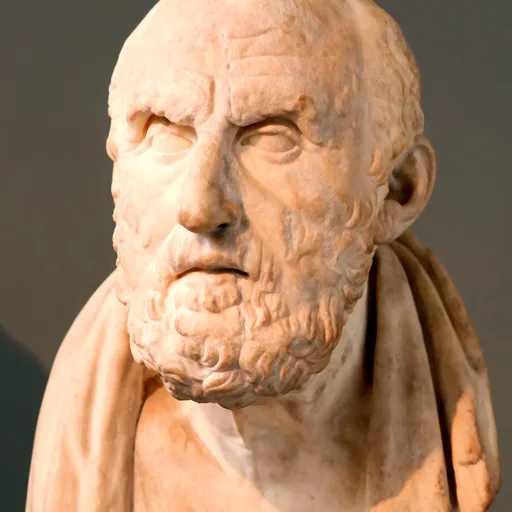
Philosophers / Contemporary Western

Wilhelm Dilthey
Germany 1833-11-19 ~ 1911-10-01
German philosopher and historian (1833-1911) who founded the methodology of the human sciences. Against natural-scientific explanation he set hermeneutic understanding (Verstehen), shaping Heidegger and Gadamer.
What You Can Learn
Three Diltheyan moves help leaders today. First, the distinction between explanation and understanding. Dashboards explain outer behaviour; only understanding — entering the customer's lived context — captures meaning. UX research, ethnography and one-on-ones are Diltheyan. Second, narrative complements analytics: personas, journeys and culture docs are tools of Verstehen, KPIs are tools of explanation. Third, his line that history alone tells us what man is frames identity work.
Words That Resonate
We explain nature; we understand mental life.
Die Natur erklären wir, das Seelenleben verstehen wir.
Man is not an eternal essence but a historical being.
Der Mensch ist nicht eine ewige Wesenheit, sondern ein historisches Wesen.
What man is, only his history can tell him.
Was der Mensch sei, sagt ihm nur seine Geschichte.
The first thing we can say of life is that it is a nexus.
Das erste, was wir vom Leben aussagen können, ist, dass es ein Zusammenhang ist.
Life & Legacy
Wilhelm Dilthey systematised the methodology of the human sciences and put hermeneutics at the centre of philosophy. Born in 1833 in Biebrich, Duchy of Nassau, son of a court chaplain, he studied theology at Heidelberg under Kuno Fischer, then transferred to Berlin. There he attended Ranke, Droysen and Trendelenburg, blending historical, theological and logical training.
After teaching at a Berlin Gymnasium and writing for journals he became a Privatdozent in Berlin in 1864, then ausserordentlicher professor at Basel (1867), where he met Jacob Burckhardt. After chairs at Kiel and Breslau he succeeded Hermann Lotze in the Berlin chair of philosophy in 1882, holding it until his retirement in 1905. His Introduction to the Human Sciences (1883) opened a project he never finished: a Critique of Historical Reason that would do for history what Kant had done for nature.
Dilthey's central thesis is methodological dualism. The natural sciences explain (erklären) outer events through laws; the human sciences understand (verstehen) the meanings expressed in human action by re-enacting them from within lived experience. He developed a descriptive and analytical psychology that fed into Jaspers's psychopathology. His typology of worldviews — naturalism, idealism of freedom, objective idealism — gave intellectual history a flexible map.
His early reputation was that of a Geistesgeschichte historian: The Life of Schleiermacher, The Young Hegel, Erlebnis und Dichtung (1905, which made Erlebnis a household word). Most of his philosophical writing took the form of papers in the Berlin Academy reports. He died of cholera caught while wintering in South Tyrol in 1911. Husserl's critique of Dilthey as a relativist long marked his reception, but Heidegger's Being and Time named him among its decisive forerunners; Gadamer's hermeneutics, Habermas's hermeneutic social theory and Emilio Betti's legal hermeneutics all branch from his work.
Expert Perspective
Within nineteenth-century German philosophy Dilthey sits at the intersection of life-philosophy, philosophy of history and hermeneutics. Where neo-Kantians focused on logical validity he set out from lived experience. His standing has rebounded since Heidegger and Gadamer recognised him as decisive.