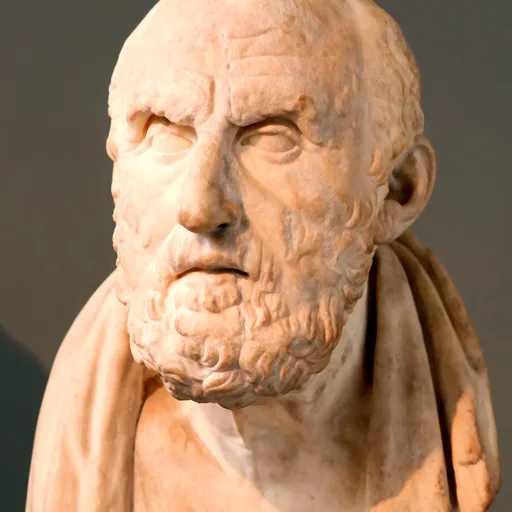
Philosophers / Contemporary Western

Edmund Husserl
Germany 1859-04-08 ~ 1938-04-27
Austrian-German philosopher and mathematician (1859-1938), founder of phenomenology. His "phenomenological reduction" — bracketing assumptions to return "to the things themselves" — shaped Heidegger, Sartre, and others.
What You Can Learn
Husserl's phenomenological reduction is the methodological ancestor of design thinking. "What do customers want?" rarely yields insight; bracketing the obvious assumption and observing the phenomenon directly does. Stanford's d.school rediscovered the same trick under the name empathy. His Lebenswelt concept warns against KPI-only management: dashboards that lose touch with lived experience produce precise answers to the wrong questions.
Words That Resonate
To the things themselves!
Zu den Sachen selbst!
Consciousness is always consciousness of something.
Bewusstsein ist immer Bewusstsein von etwas.
Genuine philosophy, whose idea is to realize the ultimate universal science, is phenomenology.
Die echte Philosophie, deren Idee es ist, letzte universale Wissenschaft zu verwirklichen, ist Phänomenologie.
The crisis of European sciences consists in positive science losing its connection to the human life-world.
Die Krisis der europäischen Wissenschaften besteht darin, daß die positive Wissenschaft den Bezug auf die menschliche Lebenswelt verloren hat.
Life & Legacy
Edmund Husserl (1859-1938) was an Austrian-German philosopher and mathematician, born to a Jewish family in Moravia, who founded one of twentieth-century thought's most consequential movements: phenomenology. Trained in mathematics under Weierstrass and Kronecker, he received his doctorate in 1883 with a thesis on the calculus of variations. Philosophy came later.
The pivot came in 1884, when Franz Brentano's Vienna lectures introduced him to intentionality — that consciousness is always consciousness of something. Husserl switched disciplines and habilitated at Halle in 1887. The Logical Investigations (1900-1901) attacked psychologism — the reduction of logic to mental processes — and made his reputation.
His middle period centers on Ideas I (1913), where he introduced the phenomenological reduction (epochē): bracketing the natural attitude that takes the world's existence for granted, in order to describe phenomena as they appear in consciousness. "Zu den Sachen selbst!" — "to the things themselves" — became the rallying cry of his school.
From 1916 to 1928 Husserl held the chair at Freiburg, where Heidegger served as his assistant. The 1927 publication of Being and Time troubled Husserl: his anointed successor had departed from his transcendental phenomenology. When Heidegger took the chair on Husserl's retirement, the relationship cooled into a final break.
In 1933 the Nazi regime stripped him of his professorship, banned him from the library, prohibited his works in Germany, and restricted his travel. He kept writing — ten hours a day in shorthand, leaving 45,000 unpublished pages. The Belgian priest Herman Van Breda smuggled the manuscripts out and founded the Husserl Archives at Leuven. His late masterpiece, The Crisis of European Sciences (1936), diagnosed how positive science had lost touch with the human Lebenswelt — a warning that still reads as fresh today. He died in Freiburg in 1938.
Expert Perspective
Husserl is one of the great wellsprings of twentieth-century continental philosophy, on a par with Frege for analytic thought. His phenomenological movement produced Heidegger, Sartre, Merleau-Ponty, and Levinas, with channels into structuralism and hermeneutics. In Japan, Nishida and Tanabe engaged him directly.