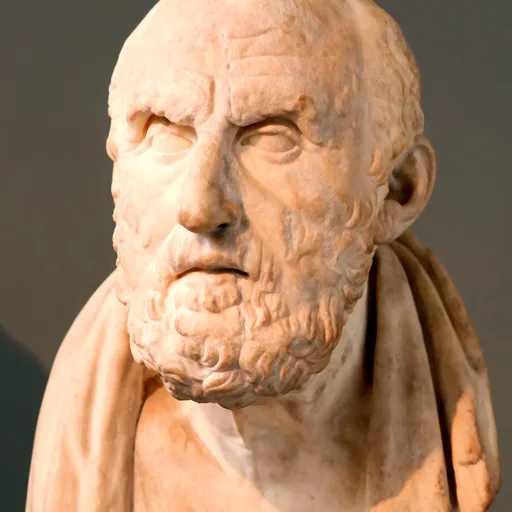
Philosophers / Contemporary Western

Hilary Putnam
United States 1926-07-31 ~ 2016-03-13
American philosopher (1926-2016) who reshaped late-20th-century analytic philosophy. Founder of functionalism, source of the Twin Earth experiment and semantic externalism, and famous for the brain-in-a-vat scenario.
What You Can Learn
Three Putnamian moves carry over into modern work. First, courage to revise: he founded functionalism and then walked away. Pivots and rewrites need this willingness to disown one's former position without treating it as defeat. Second, semantic externalism is a daily lesson for cross-functional teams. Words such as agile or ownership do not live in the head; they pick out shared practices in communities. Onboarding is less glossary, more apprenticeship. Third, brain-in-a-vat: an incoherent worry has no weight.
Words That Resonate
Life & Legacy
Hilary Whitehall Putnam, born in Chicago in 1926, was the most restless of the major American analytic philosophers, repeatedly revising his own positions. His father Samuel translated for the Daily Worker; his mother Riva was Jewish, but Putnam was raised secularly. He spent early childhood in France, then in Philadelphia. He earned his Ph.D. at UCLA in 1951 under the logical positivists Hans Reichenbach and Rudolf Carnap.
From 1965 he held a chair at Harvard. In philosophy of mind he formulated the multiple-realisability thesis: pain cannot be identical to a particular physical state such as C-fibre firing, because aliens, robots and animals could share the same mental state through different implementations. Mental states are functional roles, not material kinds. This argument launched functionalism, the dominant paradigm in cognitive science.
In philosophy of language his Twin Earth experiment showed that two molecule-for-molecule identical speakers can mean different things by "water" if the surrounding world differs (H2O on Earth, XYZ on Twin Earth). Meanings are not solely in the head — semantic externalism. With Quine he developed the indispensability argument: because mathematical entities are quantified over in our best science, we have grounds to count them as real. His brain-in-a-vat experiment used externalism to neutralise radical scepticism.
Politically he was a Vietnam War opponent, joining the Progressive Labor Party in 1968. He left in 1972 and in 1997 publicly called his radicalism a mistake. As a philosopher he changed lanes more often than any peer: from metaphysical realism to internal realism to direct realism; abandoning functionalism in the late 1980s; in his final decades, integrating Jewish ethical thought and pragmatism into philosophy. He served as president of the APA in 1976 and held the bar mitzvah he had missed as a child at nearly seventy. His readiness to revise is admired as a form of intellectual integrity.
Expert Perspective
Within late-twentieth-century analytic philosophy Putnam is the polymath. He gave functionalism its canonical form, founded semantic externalism, co-developed the indispensability argument and supplied the scenarios that teach the subject. He is also unusual for revising his own positions.