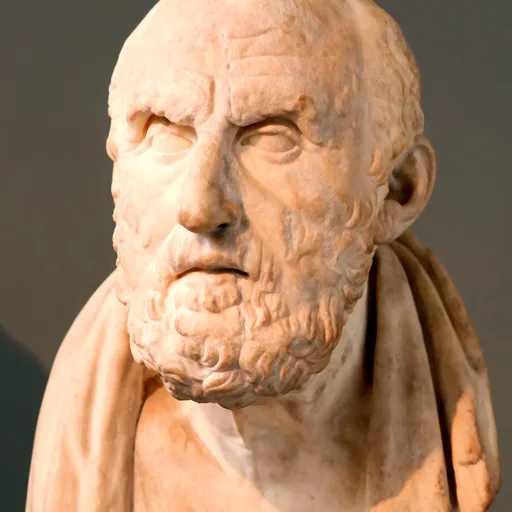
Philosophers / Contemporary Western

Maurice Merleau-Ponty
France 1908-03-14 ~ 1961-05-03
French phenomenologist (1908-1961). Friend and rival of Sartre, he turned Husserlian phenomenology toward a philosophy of the body. His Phenomenology of Perception (1945) argued we inhabit the world through the body.
What You Can Learn
Merleau-Ponty has revived in the digital age. First, as remote work and the metaverse spread, we underrate his claim that we inhabit the world through the body. Zoom-face fatigue is, in his terms, loss of body schema; in-person contact is irreducibly valuable as bodily co-presence. Second, embodied cognition in cognitive science, robotics and AI is a Merleau-Pontyan critique of symbol-processing. Third, his line that true philosophy relearns to see the world reads like a manual for attention-economy self-care.
Words That Resonate
The body is our general medium for having a world.
Le corps est notre moyen général d'avoir un monde.
The world is not what I think, but what I live through.
Le monde n'est pas ce que je pense, mais ce que je vis.
We are towards/of/in the world.
Nous sommes au monde.
True philosophy consists in relearning to see the world.
La vraie philosophie est de réapprendre à voir le monde.
Life & Legacy
Maurice Merleau-Ponty is the leading figure of twentieth-century French phenomenology and was the closest interlocutor — and sharpest opponent — of Sartre and Beauvoir. His central project was to overcome the Cartesian dualism of subject and object, mind and body, by grounding both in the lived body.
Born in 1908 in Rochefort to an army officer who died in the First World War when Maurice was five, he entered the Ecole Normale Superieure and formed lifelong friendships with Sartre, Beauvoir and Raymond Aron. He passed the agregation in 1930. Mobilised in 1939 and taken prisoner, the war experience shaped his later thought.
After the Resistance he published two foundational works: The Structure of Behavior (1942) and Phenomenology of Perception (1945). His thesis: the knowing subject is not Descartes' pure consciousness watching the world but a lived being who inhabits the world through the body. When I see something, my body schema is already weaving a concrete relation with it. This has rippled into cognitive science, robotics, dance theory and embodied therapy.
From 1945 he co-edited Les Temps modernes with Sartre and Beauvoir; the journal anchored postwar French left-wing intellectual life. He broke with Sartre in 1953 over Stalinism, articulating his political philosophy in Adventures of the Dialectic (1955). In 1952 he became the youngest professor of philosophy in the history of the College de France at forty-four.
In The Visible and the Invisible (posthumous, 1964), he deepened his phenomenology of the body into an ontology of the flesh (la chair). His 1956-58 lectures on nature rediscovered Schelling and engaged Heidegger's late thought. In May 1961 he died of a heart attack at his desk while studying Descartes — at fifty-two, his project unfinished. The legacy passed to Lefort and today to embodied-cognition research.
Expert Perspective
Within French phenomenology, Merleau-Ponty redirected the Husserlian and Heideggerian inheritance from a philosophy of consciousness toward a philosophy of the body. His influence keeps expanding into embodied cognitive science, French ontology after Nancy, and feminist phenomenology.