Philosophers / Contemporary Western

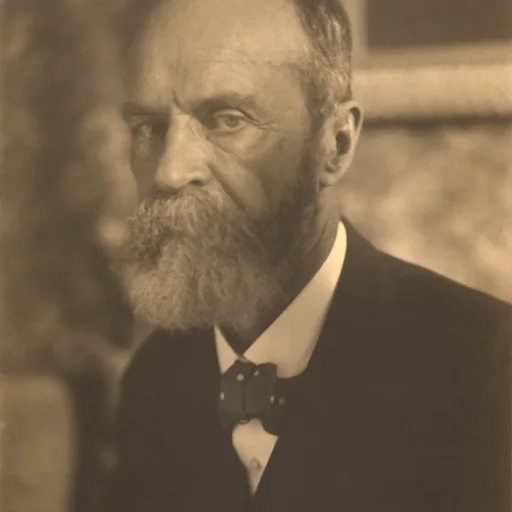
John Dewey
United States 1859-10-20 ~ 1952-06-01
American pragmatist philosopher and educator (1859-1952). Guided by learning by doing, he founded the Laboratory School at Chicago and made Democracy and Education (1916) the leading theory of progressive education.
What You Can Learn
Three Deweyan ideas serve modern life. First, we learn from experience is misread: we learn from reflecting on experience. Organisations confusing seniority with wisdom accumulate experience without learning; reflection is the missing variable. Second, school as miniature society transfers to organisational learning: onboarding and reskilling need to recreate real-world problem-solving. Third, democracy reborn every generation applies to corporate culture: founder values must be rediscovered by each generation.
Words That Resonate
Education is not preparation for life; education is life itself.
We do not learn from experience; we learn from reflecting on experience.
The self is not something ready-made, but something in continuous formation through choice of action.
Democracy has to be born anew every generation, and education is its midwife.
Life & Legacy
John Dewey was one of the most influential American philosophers of the twentieth century and its most consequential education reformer. Born in 1859 in Burlington, Vermont, he graduated from the University of Vermont in 1879 and earned his PhD at Johns Hopkins in 1884.
Though initially shaped by Hegelian idealism, contact at Hopkins with Charles Sanders Peirce and William James moved him toward pragmatism. In 1894 he was called to the University of Chicago, and in 1896 he founded the Laboratory School. The school became his philosophical laboratory: every later doctrine grew out of observation there.
Dewey's core idea was that education is not preparation for life but the continuous reconstruction of experience. Children are not passive containers of knowledge but active problem-solvers in interaction with their environment. Under the slogan school as miniature society, the Laboratory School integrated cooking, gardening, carpentry and printing with mathematics, history and science. This template inspired progressive education worldwide.
In 1904 he moved from Chicago to Columbia, broadening into philosophy, social theory, political philosophy, aesthetics and logic. Democracy and Education (1916) became the classic of twentieth-century educational thought; Experience and Nature (1925) made an original metaphysical contribution; Art as Experience (1934) influenced modern theories of design and experience.
His civic engagement was tireless. In 1937, at seventy-eight, he chaired the Mexico commission that exonerated Trotsky from Stalinist charges — a rare case of philosophical conscience entering early Cold War politics. He died in 1952 at ninety-two. Pragmatism, eclipsed during the analytic ascendancy of the 1950s-70s, was rehabilitated from the 1980s onward through Rorty and Putnam, and today Dewey is again read across democratic theory, education, aesthetics and ethics.
Expert Perspective
Within American philosophy, Dewey is one of the three giants of pragmatism alongside Peirce and James, distinguished by integrating philosophy, education and reform. Marginalised during analytic ascendancy, he was rehabilitated through neopragmatism and is read across democratic theory and ethics.