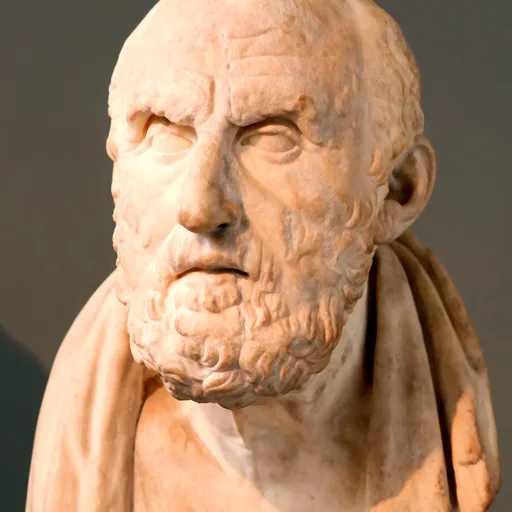
Philosophers / Medieval

Moshe ben Maimon
Spain 1135-04-06 ~ 1204-12-20
Born 1135 in Cordoba under Islamic rule, Maimonides was the medieval Sephardi rabbi, philosopher, and physician who served Saladin's court. His Guide for the Perplexed fused Aristotle and Jewish theology and shaped.
What You Can Learn
What modern professionals can take from Maimonides is a model for the hybrid expert. By day he treated royals as a court physician; by night he codified Jewish law and wrote philosophy. Working at depth across multiple domains made each domain stronger. He also declared: accept the truth from whoever speaks it. That stance — that truth is independent of source, faction, or tribe — anticipates evidence-based management and modern scientific thinking. And his persistence under persecution and exile is a model for.
Words That Resonate
From Moses to Moses, none arose like Moses.
ממשה ועד משה לא קם כמשה
It is better to acquit a thousand guilty men than to put a single innocent man to death.
نقتل ألفاً من الأبرياء أهون من إعدام مذنب واحد بشك
Accept the truth from whoever speaks it.
אל יקבל האדם אלא האמת
The risk of one possibly innocent person suffering far outweighs the risk of unpunishment.
Inculca veram libertatem mentis qua dirigitur ad Deum cognoscendum.
Life & Legacy
Rabbi Moshe ben Maimon, known in Latin as Maimonides, was the supreme intellect of medieval Judaism. His codification of Jewish law in the Mishneh Torah, his Thirteen Articles of Faith, and his philosophical Guide for the Perplexed each constitute a once-in-a-millennium contribution. The epitaph "From Moses to Moses, none arose like Moses" is not exaggerated.
He was born in 1135 in Cordoba under the Almoravid dynasty into a family of rabbis, judges, and financiers. His father Joseph, the chief judge of Cordoba's Jewish community, taught him Jewish theology, Talmud, mathematics, and astronomy directly. He is said to have known the philosopher Ibn Rushd (Averroes) in his youth. From 1148 the Almohad persecution of Jews drove the family through nominal conversion to Islam, then through Almeria, Fez, and Palestine in a long exile.
He settled in Fustat near Cairo in 1166, lost his father the same year, and after his brother David's death at sea moved from gem trading to medicine to support the family. He worked unpaid as leader of the Jewish community and around 1185 was appointed court physician to Saladin and his son al-Aziz. Richard I of England invited him to be royal physician; he chose the Islamic world over Europe.
His three great works are the Commentary on the Mishnah, the fourteen-volume Mishneh Torah, and the philosophical Guide for the Perplexed. The Mishneh Torah systematised every law deriving from the Talmud and became the foundation on which all later Jewish codes — including the Shulchan Aruch — would lean. He omitted source citations to keep the work concise, drawing fierce criticism, but the work nonetheless became the standard.
The Guide for the Perplexed, written in Judeo-Arabic, was for Jews unsettled by the conflict between faith and reason. Aristotle was authoritative for the sublunary world, revelation for the world above; the two converge in the knowledge of God. Conservatives went so far as to burn his philosophical works, but in Latin.
Expert Perspective
In Jewish thought Maimonides is the great integrator of classical rabbinic law and medieval Arabic philosophy. His method — Aristotle for the sublunary world, revelation for the world above, both meeting in the knowledge of God — runs in close parallel to Aquinas's Christian scholasticism, and the.