Investors / Value Investing
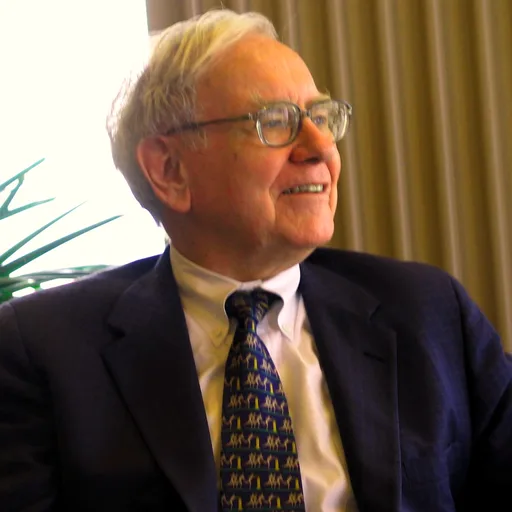
Warren Buffett
アメリカ合衆国 1930-08-30
20th-century American investor, the 'Oracle of Omaha'
Led Berkshire Hathaway to ~20% compound annual growth over half a century
The discipline of competing only within your 'circle of competence' is the core of long-term investing
Born in 1930 in Omaha, Warren Buffett evolved Graham's value investing and built Berkshire Hathaway into a global conglomerate with ~20% annual returns over fifty years. He pledged 99% of his fortune to charity.
Quotes
Rule No. 1: Never lose money. Rule No. 2: Never forget Rule No. 1.
Be fearful when others are greedy, and greedy when others are fearful.
Price is what you pay. Value is what you get.
It's far better to buy a wonderful company at a fair price than a fair company at a wonderful price.
Our favorite holding period is forever.
Risk comes from not knowing what you're doing.
Someone's sitting in the shade today because someone planted a tree a long time ago.
Related Books
Warren Buffett - Search related books on AmazonModern Application
His circle of competence corrects social-media tip-chasing: if you cannot explain the business in five minutes, stay away. The principle of buying wonderful companies at fair prices remains valid even in an index-fund era; assessing the durability of a competitive moat matters more than ratios alone. The contrarian instinct to increase contributions during downturns fits dollar-cost averaging naturally. Patience and compounding are the lessons investors on twenty- or thirty-year horizons most need to internalize.
Genre Perspective
Buffett is the supreme value-investing practitioner. From Graham he evolved under Munger toward qualitative business-quality assessment. Conservative, leverage-averse, and domain-disciplined, he embodies time-as-ally investing with unmatched half-century consistency.
Profile
Warren Buffett's half-century of roughly twenty-percent annual compounding stands virtually unmatched in financial history. His shareholder letters are studied worldwide as primary texts, and his philosophy constitutes a discipline in its own right.
Born in Omaha in 1930, son of congressman Howard Buffett, he bought his first stock at eleven. By high school graduation, his savings were worth tens of thousands in today's dollars. He attended Wharton, transferred to Nebraska, then studied under Benjamin Graham at Columbia, absorbing the margin-of-safety concept that became his bedrock.
After working at Graham-Newman, he launched his own partnership in 1956 in Omaha, delivering about thirty-percent annual returns over thirteen years. In 1965 he acquired struggling textile maker Berkshire Hathaway and converted it into an investment vehicle.
Charlie Munger joined as vice chairman in 1978, prompting a shift from pure bargain-hunting toward buying wonderful businesses at fair prices. That evolution yielded landmark investments in Coca-Cola, American Express, and later Apple.
Buffett's method is clear: invest only in what you understand, trust excellent managers, hold long-term. His circle-of-competence discipline led him to skip tech stocks during the dot-com bubble, drawing criticism vindicated by the crash. In 2008 he put five billion dollars into Goldman Sachs, demonstrating contrarian conviction.
His frugality and philanthropy are equally notable. He has lived in the same Omaha house for decades. In 2006 he pledged a major gift to the Gates Foundation and in 2010 co-founded the Giving Pledge. At the May 2025 shareholder meeting, he announced plans to hand the CEO role to Greg Abel by year-end while remaining chairman.