Entrepreneurs / Consumer
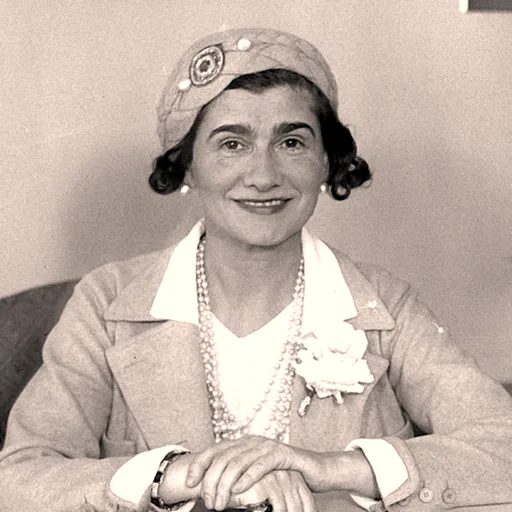
Coco Chanel
フランス 1883-08-19 ~ 1971-01-10
20th-century French fashion designer and entrepreneur
Freed women from corsets and created the luxury brand business with No. 5
The idea of turning constraints into new standards of beauty is the essence of entrepreneurship
Born in 1883 in a French poorhouse, Coco Chanel freed women from corsets, popularized jersey and the little black dress, and with No. 5 created the luxury-brand template. The sole designer on Time's 100 most influential.
Quotes
Fashion fades, but style endures.
La mode se demode, le style jamais.
Luxury is not the opposite of poverty; it is the opposite of vulgarity.
Le luxe, ce n'est pas le contraire de la pauvrete mais celui de la vulgarite.
Simplicity is the key to all true elegance.
La simplicite est la cle de toute vraie elegance.
A woman who cuts her hair is about to change her life.
Une femme qui se coupe les cheveux est une femme qui s'apprete a changer de vie.
To be irreplaceable, one must be different.
Pour etre irremplacable, il faut etre differente.
Related Books
Coco Chanel - Search related books on AmazonModern Application
Chanel offers three lessons for brand builders. First, constraints as design fuel: orphanage monotone, men's jersey, mourning black -- she subverted each into new beauty standards. For resource-strapped startups, constraints ignite differentiation. Second, brand beyond product: No. 5 extended "spare beauty" across a lifestyle, prefiguring what D2C companies aspire to today. Third, her comeback at seventy-one shows that setbacks can become strategic pauses until conviction and market needs align.
Genre Perspective
Chanel achieved product and brand innovation at once: material and silhouette revolutions plus a logo-fragrance-lifestyle ecosystem, all single-handedly in the early twentieth century. Her orphanage-to-empire rise is the adversity-entrepreneur archetype.
Profile
Coco Chanel transformed women's clothing from costume into garments made for living. Against corsets and overwrought dresses, she posed a revolutionary proposition: freedom of movement and beauty can coexist.
Gabrielle Bonheur Chanel was born in 1883 in a Saumur poorhouse. Orphaned at twelve, she learned to sew under nuns, forging a minimalist design philosophy. The orphanage's black-and-white palette shaped her signature color scheme. The nickname "Coco," from her cafe-singing days, became a global brand name.
Backed by British businessman Arthur Capel, she opened a hat shop on Rue Cambon in 1910, attracting attention with stripped-down designs. Reading the wartime acceleration of women's entry into the workforce, she repurposed men's jersey fabric into women's clothing, embodying the modern active woman.
Chanel No. 5, launched in 1921 with perfumer Ernest Beaux, fused fashion brand and fragrance. Its abstract aldehyde scent and minimalist bottle extended the brand beyond clothing. The interlocked double-C monogram, in use since the 1920s, pioneered visual logo strategy.
Her 1926 little black dress, hailed as "the Ford Model T of fashion," redefined black from mourning color to symbol of universal elegance. Her core belief: true luxury is not extravagance but beauty that remains after everything superfluous is stripped away.
During World War II she closed her maison and maintained a cooperative relationship with German occupation authorities. This collaboration drew postwar criticism and forced exile in Switzerland, a contested aspect of her legacy.
In 1954, at seventy-one, she reopened in Paris. Initially rebuffed by French critics but embraced by the American market, she regained her position. The Chanel suit became a near-uniform for working women. She remained active until her death at the Ritz in 1971, aged eighty-seven. The brand endures as a preeminent luxury house.