Entrepreneurs / Manufacturing
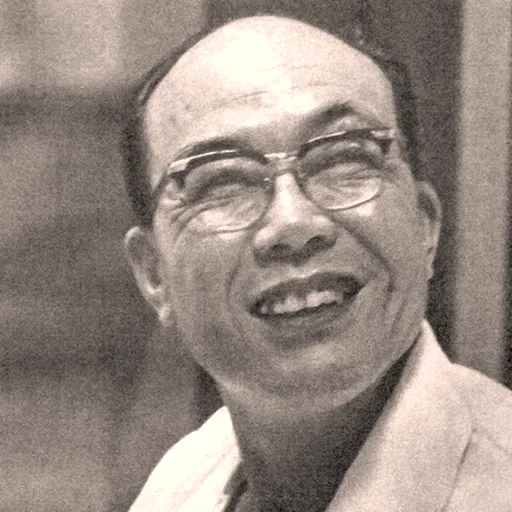
Soichiro Honda
日本 1906-11-17 ~ 1991-08-05
Showa-era engineer-entrepreneur and Honda founder
Conquered the Isle of Man TT and broke through the impossible with the CVCC engine
A pioneer of division of labor: focus on the founder's strengths and delegate weaknesses to a trusted partner
Born in 1906, Soichiro Honda rose from repair apprentice to found Honda Motor in 1948. He conquered the Isle of Man TT and broke emissions barriers with the CVCC engine, proving Japanese engineering could lead the world.
Quotes
Only about one percent of my work truly succeeded. Ninety-nine percent was failure. That one percent made me who I am.
私がやった仕事で本当に成功したものは、全体のわずか1%にすぎないということも言っておきたい。99%は失敗の連続であった。そしてその実を結んだ1%の成功が現在の私である。
Fear inaction more than you fear failure from taking on a challenge.
チャレンジして失敗を恐れるよりも、何もしないことを恐れろ。
Those who move others can feel what others feel. But empathizers struggle themselves. Those who never struggle will never move anyone.
人を動かすことのできる人は、他人の気持ちになれる人である。そのかわり、他人の気持ちになれる人というのは自分が悩む。自分が悩んだことのない人は、まず人を動かすことはできない。
An engineer is truly an engineer only when he creates something with his own hands.
技術屋というものは、手でものを生みだしてこそ技術屋である。
Demand does not simply exist out there. We create it.
需要がそこにあるのではない。我々が需要を創り出すのだ。
Related Books
Soichiro Honda - Search related books on AmazonModern Application
Honda's philosophy offers concrete startup lessons. First, co-founder specialization: delegating all management to Fujisawa pioneered the CEO-CTO split. Second, bold goals amid crisis: declaring an Isle of Man TT entry during financial trouble shows how a compelling vision galvanizes an organization in its darkest hour. Third, treating regulation as opportunity: the CVCC engine turned emissions compliance into competitive advantage, a template for navigating carbon-neutral mandates or AI governance today.
Genre Perspective
Honda fused engineering mastery with entrepreneurial drive inseparably. A hands-on builder throughout, he belongs alongside Hewlett and Wozniak. His voluntary retirement at sixty-five was remarkably forward-thinking in Japan.
Profile
Soichiro Honda's legacy transcends a single company's success. He embodied the conviction that engineering could compete globally, turning postwar rubble into a mobility empire.
Born in Shizuoka to a blacksmith's family, Honda recalled being captivated by his first glimpse of an automobile. After elementary school, he apprenticed at Art Shokai, a Tokyo repair shop, mastering mechanics through six years of hands-on work. That tactile approach never left him.
He established Tokai Seiki to manufacture piston rings, but when products failed quality standards, he audited metallurgy courses at Hamamatsu Technical School. After the war, he sold Tokai Seiki to Toyota, founded the Honda Technical Research Institute in 1946, and began attaching surplus military engines to bicycles.
Honda Motor Co. was established in 1948. The following year he met Takeo Fujisawa and handed over the company seal and full business authority, concentrating solely on engineering. This co-founder model propelled a workshop into a listed corporation.
In 1954, amid financial crisis, Honda declared entry into the Isle of Man TT. By 1961 his machines swept both the 125cc and 250cc classes, proving Japanese engineering could surpass global standards. He entered Formula 1 in 1964 and won the 1965 Mexico Grand Prix.
His engineering apex came in the 1970s. When the U.S. Muskie Act set exhaust standards the majors called impossible, Honda developed the CVCC engine and became the first to clear regulation in 1972, using proprietary technology alone.
In 1973, Honda retired at sixty-five alongside Fujisawa, exceptional in an era of family succession. This ensured a culture of challenge, later seen in ASIMO and HondaJet.
After his 1989 U.S. Automotive Hall of Fame induction, Honda placed the medal before Fujisawa's memorial, saying it belonged to both. He died August 5, 1991, at eighty-four.