Entrepreneurs / Manufacturing
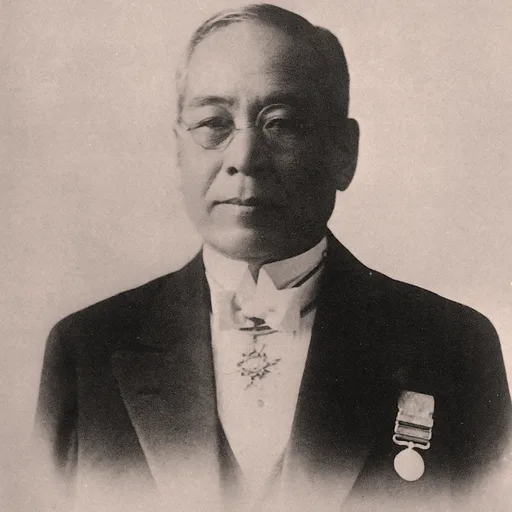
Sakichi Toyoda
日本 1867-03-19 ~ 1930-10-30
Meiji-early Showa inventor and industrialist
Invented the automatic loom and laid the foundation for the Toyota Group
Auto-stop upon anomaly detection ('jidoka') connects to AI-era risk management
Self-taught inventor born in 1867, Sakichi Toyoda created the automatic loom and jidoka. His patent sale to Britain funded his son's car venture, seeding Toyota. He held 84 patents.
Quotes
Open the shoji screen and look outside; the world is vast.
障子を開けてみよ、外は広いぞ
Think on the shop floor; act on the shop floor.
現場で考え、現場で実行する
Do not think about a hundred things at once; think a hundred times about one thing.
百についてはいっぺんに考えようとせず、一つについて百遍考えよ
Ask why five times.
なぜを五回繰り返せ
Invention lies not in knowledge itself but in the ingenuity to apply it.
発明は知識そのものよりも、それを活用する工夫にある
Related Books
Sakichi Toyoda - Search related books on AmazonModern Application
Toyoda's jidoka resonates in the age of AI and automation. Building error-detection into processes maps onto automated testing, CI/CD pipelines, and financial risk systems. His Five Whys is the lowest-cost quality tool available: tracing failures to root causes prevents recurrence, a practice as valuable for startups as for large manufacturers. Selling his patent to fund the next generation reads as an early exit strategy, a model for entrepreneurs weighing when to harvest one venture and seed the next.
Genre Perspective
Toyoda unified inventor and entrepreneur at a high level. Like Edison he industrialized invention, but unlike Edison he entrusted the next generation with a leap into an entirely different industry. His international patent sale was an advanced IP strategy for his era.
Profile
Sakichi Toyoda's legacy extends far beyond looms. His concept of jidoka, equipping machines to detect and stop on errors, remains a pillar of the Toyota Production System and has spread across global manufacturing.
Born in 1867 in what is now Kosai, Shizuoka, Toyoda showed mechanical aptitude early. Japan's 1885 Patent Ordinance and his mother's struggle at a hand loom inspired him to improve textile machinery. In 1891 he patented his first wooden hand loom; by 1896 he invented Japan's first power loom.
His obsession was jidoka: machines that stop themselves when something goes wrong. The 1924 Type-G automatic loom replenished weft thread without stopping while halting at the first quality defect. Britain's Platt Brothers paid 100,000 pounds for the rights.
Two concepts define his philosophy. Jidoka gives machines judgment, letting one worker oversee multiple looms. The Five Whys method traces problems to root causes. Toyota later formalized both as global standards.
In 1926 he founded Toyoda Automatic Loom Works, then backed his son Kiichiro's auto research with the Platt proceeds. Toyota Motor was established in 1937. Sakichi died in 1930 at 63 with 84 domestic patents, 13 foreign patents, and 35 utility models.
His path was far from smooth. Funding shortages forced repeated interruptions, and he endured strained investor relations and family difficulties. In 1910 he visited the United States to study advanced textile technology, returning with renewed commitment. His perseverance through failure after failure is as defining as his inventions. The numbers on the patent certificates mask countless trials behind them.