Philosophers / Ancient Greek
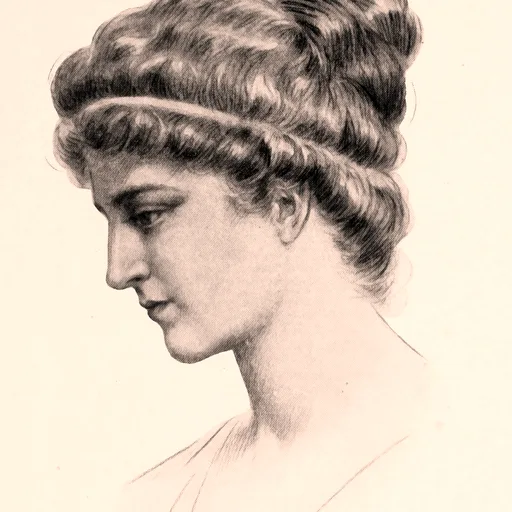
Hypatia
東ローマ帝国 0360-01-01 ~ 0415-03-01
Philosopher and mathematician in 4th-century Alexandria
Led a school transcending sects and was called the last light of ancient intellect
The courage to maintain intellectual independence is essential in our era of social media polarization
A Neoplatonist philosopher and mathematician in late-fourth-century Alexandria. She taught across faiths until murdered by a mob in 415 AD, becoming a lasting symbol of intellectual freedom's value and cost.
Quotes
Reserve your right to think, for even to think wrongly is better than not to think at all.
To teach superstitions as truth is a most terrible thing.
Life is an unfoldment, and the further we travel the more truth we can comprehend.
Fables should be taught as fables, myths as myths, and miracles as poetic fancies.
Related Books
Hypatia - Search related books on AmazonModern Application
Hypatia's life illustrates the value and cost of intellectual independence. She kept a space open to people of different beliefs while polarization intensified. In business, where data-driven judgment must contend with groupthink, her example reminds us that welcoming diverse perspectives strengthens organizations. Her cross-disciplinary work prefigures interdisciplinary thinking, a key driver of innovation. Reasoning from evidence rather than authority remains her most practical legacy.
Genre Perspective
Hypatia belongs to the late Alexandrian school of Neoplatonism. She favored close reading of Plato and Aristotle over Iamblichus's mysticism. Her murder marks where free philosophy gave way to political-religious pressure, symbolizing the transition from antiquity to the Middle Ages.
Profile
Hypatia lived at a fault line of history. Late-fourth-century Alexandria remained a center of philosophy and science, but Christianity's rise as state religion was straining older intellectual traditions. Her life and violent death mark the point that tension became irreversible.
Her father Theon, a mathematician at the Mouseion, taught her. She wrote commentaries on Diophantus and Apollonius, though neither survives; scholars believe her notes were absorbed into transmitted texts. She built astrolabes and hydrometers, bridging theory and practice.
Her core activity was teaching Neoplatonist philosophy through Plato and Aristotle. Her school attracted pagans and Christians alike. Synesius, future bishop of Ptolemais, expressed deep reverence for her and sought her help constructing an astrolabe. This cross-faith openness made her school a rare space of pluralism.
As conflict between prefect Orestes and Bishop Cyril intensified, rumors accused Hypatia of preventing their reconciliation. In March 415 a mob led by Peter dragged her from her carriage and killed her. The murder shocked the empire and hardened anti-Christian sentiment among later Neoplatonists.
Her legacy has been reinterpreted across centuries: a model of Christian virtue in the Middle Ages, a rationalist icon during the Enlightenment, the last Hellenist in Kingsley's 1853 novel, and a feminist symbol in the twentieth century. This layered reception testifies to the enduring questions her life raises about knowledge, power, and freedom.